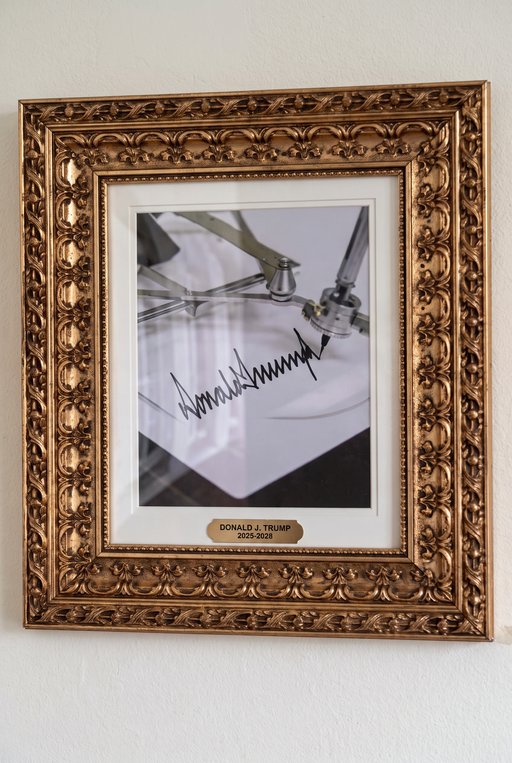
In 2025, a House Oversight investigation into Biden-era autopen authorizations put mechanical presidential signatures back in the national spotlight. As the 47th administration issues executive orders on tariffs, border actions, and deregulation, this public record examination documents which signings are publicly witnessed — and which signing methods remain undocumented.
SIGNATURE REFERENCE & WITNESSED SIGNING RECORD
Reference Specimen (Public Domain) 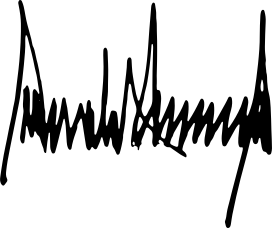
Specimen: Wikimedia Commons, PD-signature.
For visual reference only — not a forensic finding.
Documented Witnessed Signings
executive orders signed in witnessed public ceremonies,
each with photo/video evidence on file
Archived under Presidential Records Act 44 U.S.C. § 2201